
RSPO Interactive Indicators & Guidance 2024
Rountable On Sustainable Palm Oil
Develop & Implement Global  Standards
For Sustainable Palm Oil Production
The RSPO is a not-for-profit, international membership organisation established in 2004, that unites stakeholders from the seven sectors of the palm oil industry
The Stakeholders Of Palm Oil Industry

Oil Palm Producers

Consumer Goods Manufacturers

Banks And Investors

Social or Developmental NGOs

Palm Oil Processors And Traders

Retailers

Nature Conservation Non-governmental Organisations (NGOs)

The RSPO Principle & Criteria
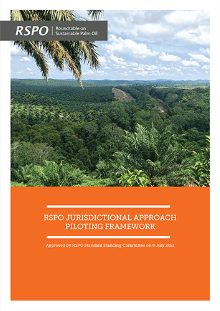
RSPO Principle & Criteria 2005
RSPO first set of Principle & Criteria was adopted for pilot implementation in November 2005 and came in full effective as a Standard in November 2007. The RSPO Principle & Criteria 2007 was then updated in 2013 and 2018.
The RSPO P&C 2023 was a result of a comprehensive review and revision of P&C 2013 that commenced in January 2022 and was completed in October 2023. The RSPO P&C 2023 is accepted at the General Assembly by the RSPO members on [date]. The review of P&C 2023 was conducted in accordance with the RSPO Standard Operating Procedure For Standard Setting and Review 2020. The SOP was, in turn, developed in compliance with the ISEAL Code of Good Practice for Setting Social and Environmental Standards, Version 6 December 2014.
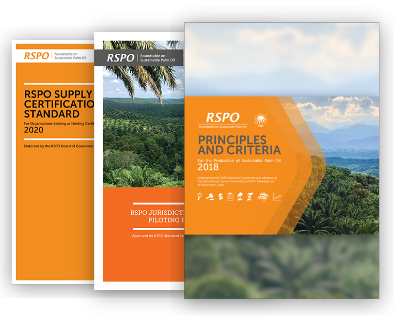
RSPO Principle & Criteria 2007, 2013 and 2018
The RSPO Principles are the essential rules or elements of legal, economically viable, environmentally appropriate and socially beneficial management and operations. The indicators provide means of judging whether or not a Criteria has been fulfilled leading to a Principle. They are the foundation of the RSPO certification scheme and together with the Preambale and Definition of Terms, constitute the core of a comprehensive standards package.
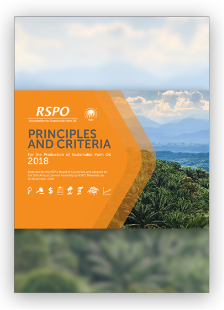
RSPO Principle & Criteria 2023
Principles, Criteria and Indicators are normative; while Guidance and Procedural Note are informative. Critical Indicators are identified and are marked ‘C’ next to numbering of respective indicator.
*The RSPO P&C 2023 need to be applied together with other associated documents for which respective associated procedure, tool, guidance and manual is provided within respective indicator are in Bold and Underlined.
Drafting Guidelines
The 2024 RSPO P&C has been drafted based on a simplified adaptation
The 2024 RSPO P&C has been drafted based on a simplified adaptation of the ‘ISO/IEC Directives, Part 2, Principles and Rules for the Structure and Drafting of ISO and IEC documents’, in particular Section 7 ‘Verbals Forms for Expression of Provisions’. This is to ensure that the standard is written, and can be read or interpreted, in a consistent manner and style across the entire document.
The following drafting rules were generally applied during the revision process for the 2024 RSPO P&C.
Sustainable Palm Oil Production Worldwide
Covers the most significant environmental and social impacts of palm oil production and the immediate inputs to production, such as seed, chemicals and water, and social impacts related to on-farm labour and community relations.
Read CriteriasAll Production Level Companies
Human rights protected, respected and remedied. The palm oil sector contributes to reducing poverty and palm oil production is a source of sustainable livelihoods.
Read CriteriasExisting Plantings
A sustainable, competitive, and resilient palm oil sector ensures long-term viability of the entire supply chain and shared benefits for both private sector as well as the livelihoods of communities where oil palm is grown.
Read CriteriasDifferent Types Of Fresh Fruit Brunches And Palm Oil Producers
A sustainable, competitive, and resilient palm oil sector ensures long-term viability of the entire supply chain and shared benefits for both private sector as well as the livelihoods of communities where oil palm is grown.
Read Criterias